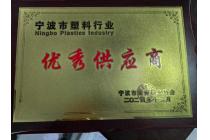
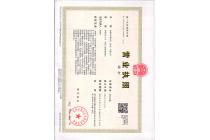
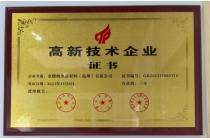
Certifications

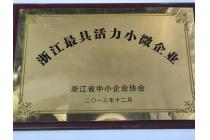
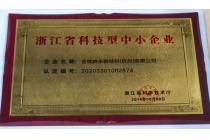

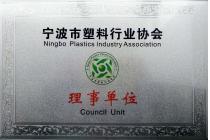
Address: No. 489, Hongtai Sixth Road, Hongken Farm, Xiaoshan Economic Development Zone, Hangzhou, Zhejiang, China
Tel: +86-571-83532215
Fax:+86-571-82879575
Website: www.hafukeji.com
What level of requirements do customers of the flame retardant for PVC wood-plastic composites have?
When using flame retardants to flame-retard PVC wood-plastic composites, considering the variety of materials in the system itself, it is generally necessary to consider flame-retarding the plastic and wood fibers separately. However, appropriate flame retardants are usually selected by combining the flame-retardant mechanisms of the two. Flame retardants are usually directly added to the formulations of plastics and PVC wood-plastic composites in a solid state. Therefore, the flame retardants used for plastics or PVC wood-plastic composites should have a certain temperature resistance and should not decompose during the processing process. Although some studies aim to make the flame retardants for PVC wood-plastic composites effective by enhancing the fire resistance of lignocellulose, most of the research focuses on making PVC wood-plastic composites flame-retardant by improving the fire resistance of the matrix materials.
There are two main categories of flame retardants for PVC wood-plastic composites: inorganic flame retardants and organic flame retardants. Currently, relatively well-studied and complete systems include the halogen-based flame-retardant system, the phosphorus-nitrogen-based flame-retardant system, the aluminum-magnesium-based flame-retardant system, the intumescent flame-retardant system, and the silicon-based flame-retardant system. Regarding environmental issues, halogen-free flame retardancy has attracted great attention. In recent years, since halogen-containing flame-retardant materials will produce a large amount of smoke and toxic gases during the combustion process, among which halogen-free flame retardants and intumescent flame retardants (IFRS) have been increasingly used to delay the flammability of PVC wood-plastic composites.
Hangzhou Jinwei Nano: Flame retardants for wood-plastic composites, mildew-proof agents for wood-plastic composites, anti-aging agents for wood-plastic composites, anti-aging agents for PVC, PP flame retardant masterbatches, anti-aging agents for suspended floors, anti-aging agents for sunshade nets, anti-aging agents for lawns, flame retardants for silicone rubber, and flame retardants for cable filler ropes.