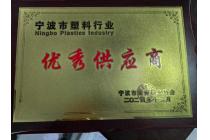
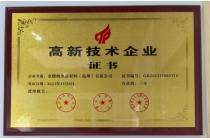
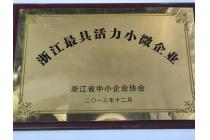
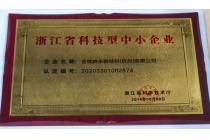
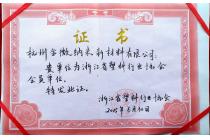
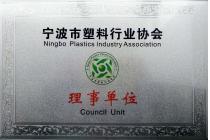
Certifications

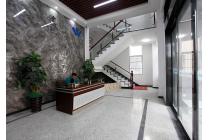
Address: No. 489, Hongtai Sixth Road, Hongken Farm, Xiaoshan Economic Development Zone, Hangzhou, Zhejiang, China
Tel: +86-571-83532215
Fax:+86-571-82879575
Website: www.hafukeji.com
The anti-aging property and anti-ultraviolet performance of ABS plastic
ABS plastic has a very wide range of applications both in the industrial field and in daily life. Therefore, the service life of ABS plastic raw materials has attracted much attention. Among them, the most concerned aspects are its anti-aging property and anti-ultraviolet property. So, what about its anti-aging property and anti-ultraviolet performance exactly?
ABS plastic is a variety with relatively large production output and more prominent aging problems. In recent years, many countries have carried out a large number of studies on its aging and anti-aging. The research results show that after being kept at 60°C for 3000 hours, its impact strength will be 10% - 70% of the original value (varying depending on the formula and the composition of the copolymer). And it is even more unstable when exposed outdoors. For example, the impact strength of ABS produced by emulsion copolymerization will decrease by 80% when exposed outdoors for less than one month. Therefore, the unstabilized ABS can hardly be used outdoors. After being exposed to sunlight, heat and oxygen for a long time outdoors, ABS plastic products will exhibit phenomena such as yellowing, brittleness, cracking, loss of surface luster, and a significant decline in mechanical properties, and eventually lose their use value. The wavelength of sunlight ranges from 2×10⁻⁷m to over 1×10⁻⁷m, and lights of different wavelengths have different energies. Generally, the energy required for the breaking of covalent bonds is between 160 - 600kJ/mol, and the energy of ultraviolet light (with a wavelength of 3×10⁻⁷ - 4×10⁻⁷m) is 290 - 400kJ/mol, which is sufficient to cause the chemical bonds of various organic substances to break. This indicates that the main cause of the photoaging of polymers like ABS plastic raw materials is ultraviolet light.
It can be seen from this that the anti-aging property and anti-ultraviolet performance of ABS plastic are quite ordinary. If we want to improve its anti-aging property and anti-ultraviolet performance, it must be achieved through modification. To stabilize the color of its raw materials, phosphates of alkali metals need to be added, and to improve the anti-ultraviolet performance of ABS plastic, an appropriate amount of ultraviolet absorbers must be added. Liangli New Materials has developed and produced a large number of ABS plastics with good anti-aging and anti-ultraviolet properties in order to improve this defect.