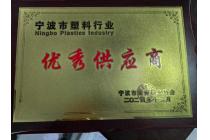
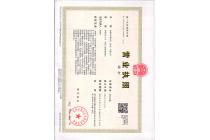
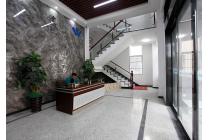
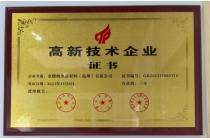
Certifications

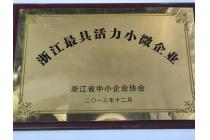
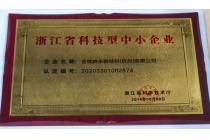
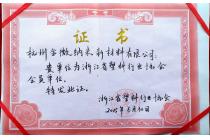
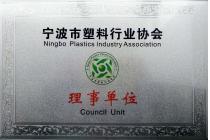
Address: No. 489, Hongtai Sixth Road, Hongken Farm, Xiaoshan Economic Development Zone, Hangzhou, Zhejiang, China
Tel: +86-571-83532215
Fax:+86-571-82879575
Website: www.hafukeji.com
How many types of mildew-proof agents are there, and what are their functions?
There are a great many types of mildew-proof agents, and they are widely used.
In order to create a truly high-quality life, many merchants sincerely hope that their products have excellent functions such as moisture resistance and mildew prevention. Of course, they are also constantly making efforts. Compared with the products a few years ago, the products around us nowadays have made great progress in performance, which are all very remarkable achievements. And mildew-proof agents have also played a significant role in this.
We can understand mildew-proof agents by looking at the different functions between mildew-proof agents and preservatives:
A mildew-proof agent usually refers to the need for mildew-proof effect of products such as coatings in the dry film state, that is, the film. A mildew-proof agent is an additive that, in the dry film state, mainly targets molds, kills and inhibits the growth of molds.
The function of a mildew-proof agent: It eliminates molds and prevents their growth. A mildew-proof agent can act on the enzyme system, thus affecting the metabolism of molds and ultimately leading to their death. Moreover, it can prevent the possibility of molds surviving through other channels by inhibiting the mold transaminase system, thus promoting the demise of molds. Its main function is to enhance the degree of the phosphoric acid oxidation-reduction system, severely damaging the functions of mold cells so that they cannot grow normally. And it also seriously damages the energy release system of molds, making them unable to cause any harm to the outside world.
There are a wide variety of preservatives on the market nowadays. Analyzing them according to their active components, they can be mainly classified into the following categories: isothiazolinones, formaldehyde-releasing types, benzimidazoles, substituted aromatic hydrocarbons, organic bromides, organic amines, piperazine triazines, etc.
1,2-Benzisothiazolin-3-one, abbreviated as BIT. Preservatives of this type include Proxel GXL, Proxel XL-2, Troysan 586, Mergal K10-N, Acticide BW20, Biocide BIG-A 50M, bactericidal preservative PT, bactericidal preservative BTG, SD-202-1, SD-202-2, etc.
5-Chloro-2-methyl-4-isothiazolin-3-one/2-methyl-4-isothiazolin-3-one, abbreviated as CMIT/MIT, is a commonly used in-can preservative with relatively high cost-effectiveness. Preservatives of this type include Kathon LXE, Acticide MV, Biocide K 10 SG, Acticide F, Bactrachem W15, Bactrachem TS 15, Huake-88, SD-818-1, SD-818-2, etc.
Formaldehyde-releasing preservatives. As is well known, formalin is a preservative. In fact, formalin is an aqueous solution of formaldehyde with a concentration of 35%-40%. Since the requirements for the content of free formaldehyde in interior wall coatings in China are relatively strict, formaldehyde-releasing preservatives (abbreviated as FR) are less used in interior walls. Formaldehyde-releasing preservatives include N-formal, O-formal, and the speed of formaldehyde release from O-formal is higher than that from N-formal. Commercial products also include Troysan 174, Troysan 186, Nuosept 95, Ecocide BA, etc.
The uses of mildew-proof agents
For products with such powerful functions, we all especially want to know where they can be used. According to current surveys, mildew-proof agents are a very commonly used raw material in industry. That is to say, mildew-proof agents are added to things we often come into contact with, such as paints, plastic products, PVC floors, wall paints, etc. Therefore, this is also one of the important reasons why these things have excellent mildew-proof effects.